Famous Forest Folk
As well as being world-renowned for its habitats and wildlife, the New Forest is home to thriving communities.
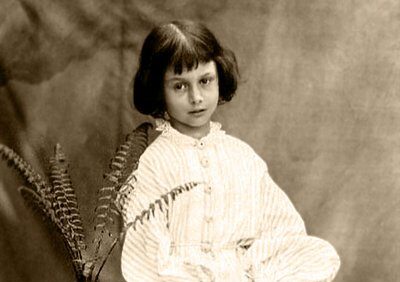
Alice Pleasance Liddell: The Real Alice in Wonderland
Alice Pleasance Liddell (1852 – 1934) was the little girl who inspired Lewis Carroll’s Alice’s Adventures in Wonderland and Through the Looking Glass.
Under her married name of Alice Hargreaves, she came to live in Lyndhurst and was a society hostess.
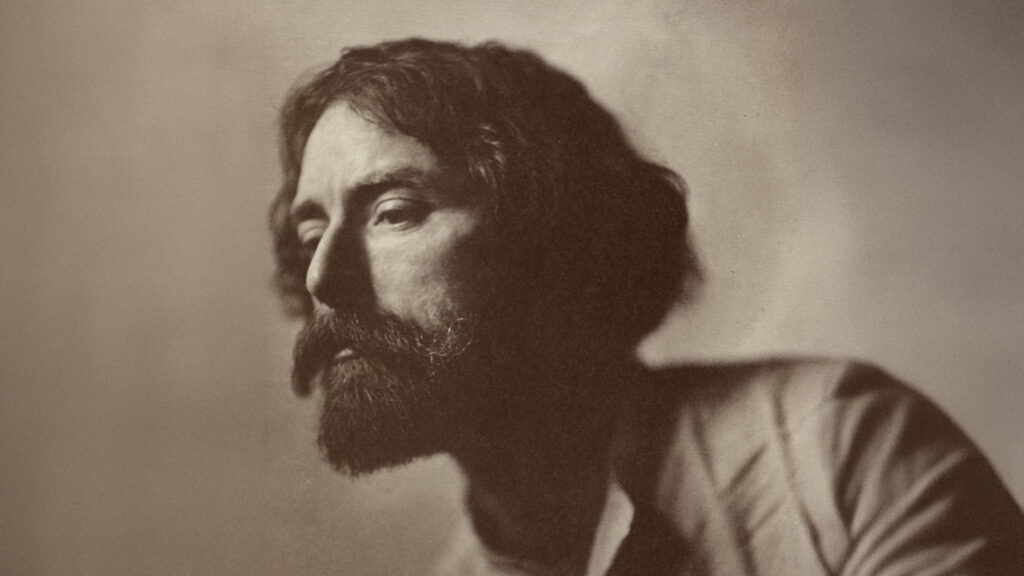
Augustus John: The Painter
Augustus John (1878 – 1961) was Britain’s leading portrait painter in the 1920s and a defender of New Forest Gypsy rights.
He was a controversial figure, both for his unconventional lifestyle (he lived for a while in a commune and was known as ‘The King of Bohemia’) and for what some considered to be the ‘cruel’ depiction of his portrait paintings.
Augustus John came to live in Fordingbridge in 1927 and his home at Fryern Court became an open house for travelling artists. He continued to paint right up to his death.
He had a lifelong interest in Gypsy culture and owned his own vardo (Gypsy wagon). He was regarded by Forest Gypsies, who called him Sir Gustus, as their king. As president of the Gypsy Lore Society, he fought hard for them to retain their rights to travel and settle where they liked in the New Forest.
A bronze statue celebrating his life can be seen in Fordingbridge on the banks of the Avon near the Great Bridge.
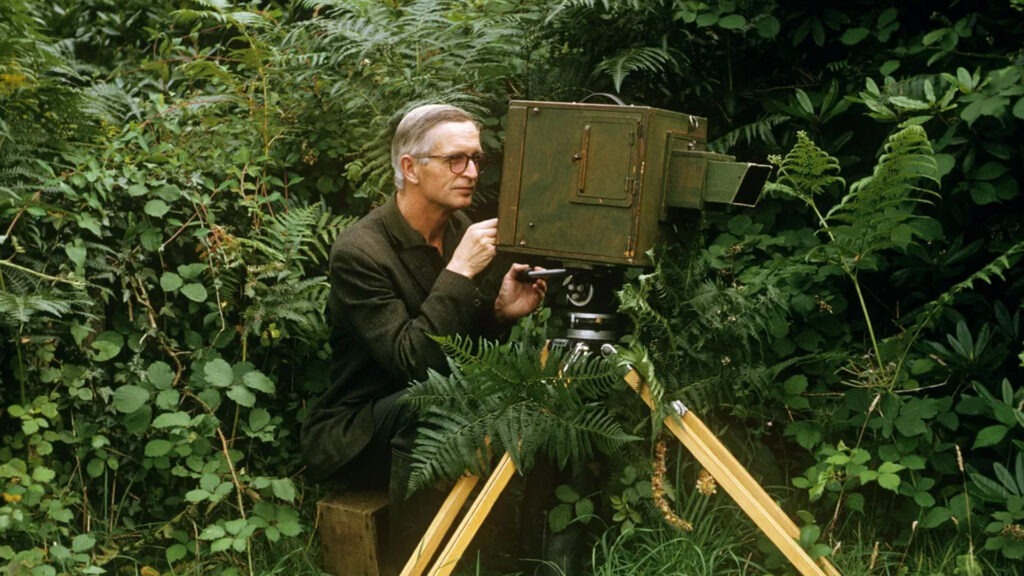
Eric Ashby: The Film-maker
Eric Ashby (1918 – 2003) shared his love of the New Forest with the world through his wildlife films. He believed that wild animals should be filmed behaving naturally, and his high standards of still photography and film-making in the wild became his hallmark.
Eric Ashby worked on many wildlife programmes for the BBC natural history unit. He was an extraordinarily patient man, visiting a site on 90 occasions to record just one minute of film about a badger. He was one of the first to capture the behaviour of badgers in daylight and also developed soundproof camera boxes that allowed him to get close to deer without the animals taking fright.
It took four years of work for him to shoot enough sequences for his first 45-minute film, The Unknown Forest, which was shown by the BBC in 1961. A unique portrait of real animal lives, it was warmly received by viewers, who were able to see how badgers, deer and foxes in the New Forest behaved.
Two years later he filmed The Major, the life story of a village oak tree and the first wildlife film to be shot in colour.
Other films followed, among them A Hare’s Life, A Forest Diary and The Private Life Of The Fox. He produced work for The Year of the Deer and At Home With Badgers. There was also a biographical piece, The Silent Watcher.
An ardent conservationist, he founded the first local Badger Group in 1969 and was outspoken in his views against hunting. His secluded home in Linwood became a haven for some 30 wild foxes from rescue centres. Visitors from around the world came to see how Eric and his wife Eileen cared for them. They raised a cub called Tiger and told his story in a book My Life With Foxes (2000).
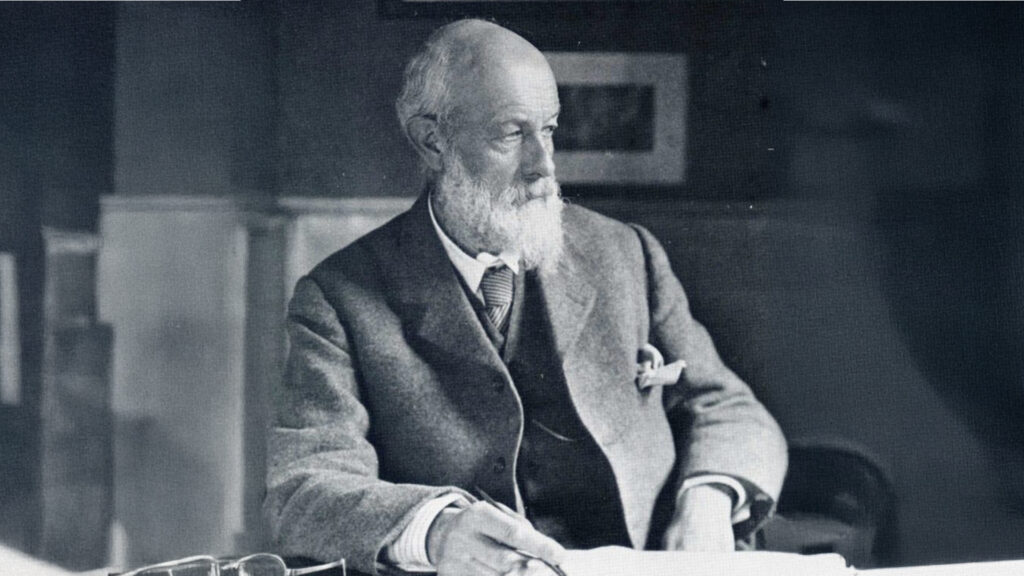
Heywood Sumner: The Artist
George Heywood Maunoir Sumner (1853 – 1940), known as Heywood Sumner, was a renowned painter, illustrator and craftsman and an important figure in the Arts and Crafts movement.
After bringing his family to Cuckoo Hill, near South Gorley, he spent the rest of his life researching and recording the archaeology, geology and folklore of the New Forest.
He illustrated an edition of J.R.Wise’s The New Forest and also designed stained glass windows for churches. He published and hand-drew each page of his own collection of 11 Hampshire folk songs, The Besom Maker and Other Country Folk Songs.
One of his last commercial works was a tapestry inspired by the New Forest called The Chace, woven by William Morris and Company and later acquired by the Hampshire Museums Service.
Heywood Sumner designed and built his ideal family house at Cuckoo Hill and lived there from 1904. Six years later he published The Book of Gorley, a journal of his new rural way of life. The book included anecdotes and illustrations of local characters and the history of the New Forest and its nearby commons. His Guide to the New Forest, published in 1923, is considered to be one of the best guides written about the woods of the New Forest.
A keen archaeologist, the results of his fieldwork were published in two companion volumes: The Ancient Earthworks of Cranborne Chase and The Ancient Earthworks of the New Forest.
Heywood Sumner enjoyed 36 years at his beloved Cuckoo Hill. He died there in 1940 at the age of 87. The house still exists and is now a care home.
The Book of Gorley was republished in 1987 as Cuckoo Hill: The Book of Gorley. Illustrated throughout with his distinctive line drawings, maps and watercolour paintings, it is a very popular book.
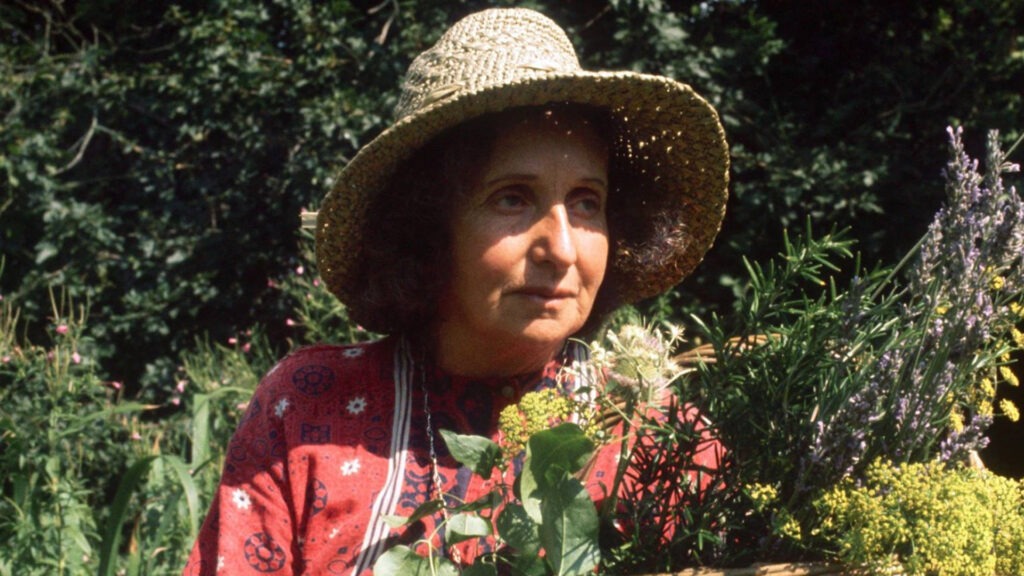
Juliette de Bairacli Levy: The Herbalist
Known as ‘the grandmother of herbalism’, Juliette de Bairacli Levy (1912 – 2009) was the author of several books including Wanderers of the New Forest, in which she described the simple way of life of Commoners and Gypsies that has gone forever from the Forest.
Like the artist Augustus John, she had a strong bond with the Forest Gypsy community. She gave up her studies to be a veterinarian after becoming disillusioned with the teaching practice of conducting experiments on live animals. Wishing instead to learn how to treat animals naturally, she embarked on a nomadic lifestyle and travelled all over the world with Bedouins, nomads, Gypsies and peasants. Through them she learned how they used plants and herbs to treat the ailments of both people and animals.
Realising that these ancient methods of treatment might be lost forever as vaccines and chemical medicines were developed, Juliette became a pioneer of holistic animal care as she recorded their remedies and published several herbal handbooks.
She cured many animals by herbal methods and developed her own brand of herbal pet products. She is credited with curing a herd of 3,000 sheep condemned by black scour in Yorkshire during World War II by feeding them green herbs, milk and molasses.
For three years she lived with her two small children in a tiny cottage at Abbots Well, near Frogham, in the north of the New Forest. She recounted her experiences in Wanderers of the New Forest (1958), describing a simple way of life – such as daily naked bathing in Windmill Hill Pond – that has long disappeared.
Many of Juliette’s friends in the New Forest were Gypsies and she spent a lot of time with them and wrote about them fondly in her book. The foreword was written by Augustus John, a fellow champion of the Gypsies.
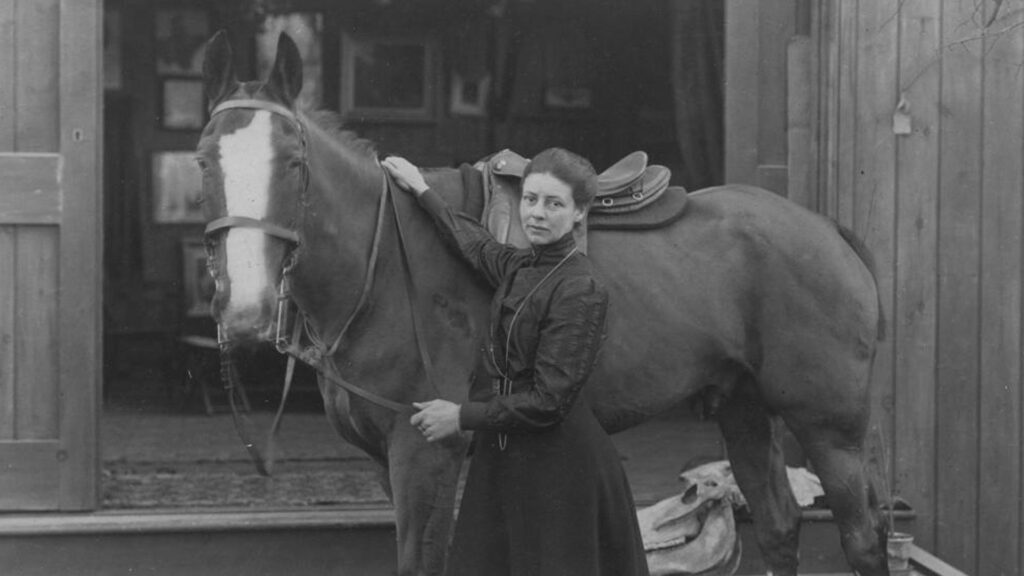
Lucy Kemp-Welch: The Artist
Lucy Kemp-Welch (1869 – 1958) spent many hours sketching the ponies that roamed the New Forest when she was a young girl and went on to become the foremost painter of horses of her time, particularly of working horses.
Born in Bournemouth, she showed an early excellence in art and held her first exhibition when she was just 14 years old.
Colt-Hunting in the New Forest, her best known work, is in the Tate Gallery, and some of her other paintings are in the Imperial War Museum. She also became famous for her illustrations for Black Beauty by Anna Sewell.
She was the first president of the Society of Animal Painters.
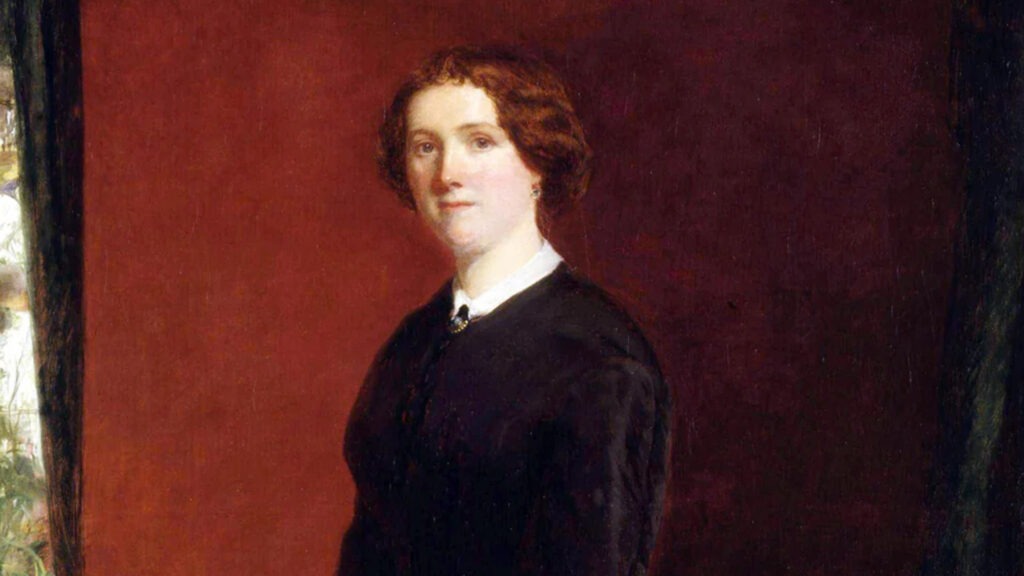
Mary Elizabeth Braddon: The Writer
One of the New Forest’s most celebrated residents in the 19th century, Mary Elizabeth Braddon (1837 -1915) was a prolific writer and the founder of a new school of ‘sensational’ fiction. She and her husband, the publisher John Maxwell, had a country home at Bank, near Lyndhurst.
Writing as M.E.Braddon, the one-time actress produced at least 80 novels as well as essays, plays, poems and short stories. Her most famous work was Lady Audley’s Secret (1862), which made her rich and famous. She and her husband commissioned construction of their New Forest country house, named Annesley, in the early 1880s. The family visited regularly from their main family home in Richmond and their holidays were usually announced in the local newspaper.
Miss Braddon also appeared on postcards and photographs of Bank published at the time, and her home featured in sight-seeing charabanc tours of the New Forest. The couple were active and popular members of the community and provided public reading rooms at Bank and nearby Emery Down. The facility at Emery Down became a school annexe and was later demolished, while the reading room at Bank was used as a school and was then incorporated into a new development.
After John Maxwell’s death in 1895 his widow rarely visited the Forest. Annesley became a children’s home in the 1940s and was then converted into apartments.
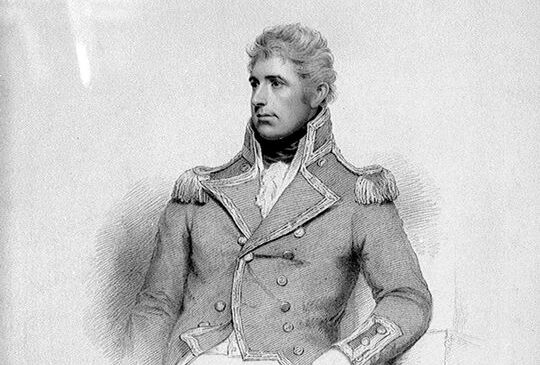
Sir Harry Burrard Neale: The Admiral
Harry Burrard, son of the Governor of Yarmouth Castle, was born in the Castle and educated at Christchurch Grammar School.
He joined the Royal Navy in 1778 and went on to have a glittering naval career, rising to be a Lord of the Admiralty and subsequently Commander-in-Chief of the Mediterranean Fleet.
He achieved national prominence in 1797, for his role in quelling the mutiny at the Nore – an anchorage in the Thames Estuary.
Sir Harry was also Mayor of Lymington and an MP for the town for no fewer than 25 years over a period of 45 years. Walhampton House (now occupied by Walhampton School) was his family home.
Walhampton Monument
The Walhampton Monument – for which the foundation stone was laid in September 1840 and which was completed in 1842 – is a particularly fine 76ft obelisk displaying plaques on its four sides that record different aspects of Sir Harry’s life.
It is the 250th anniversary of Sir Harry’s birth during 2015, which is being commemorated by the Burrard-Neale 250 group, with support from our Sustainable Communities Fund. The fund has provided £18,500 towards the restoration of the monument and surrounding area, and our archaeologist has offered expert advice to the volunteers.
As well as restoration of the monument, there have also been a series of events, concerts and walks throughout 2015 to celebrate the life of Lymington’s most famous son.
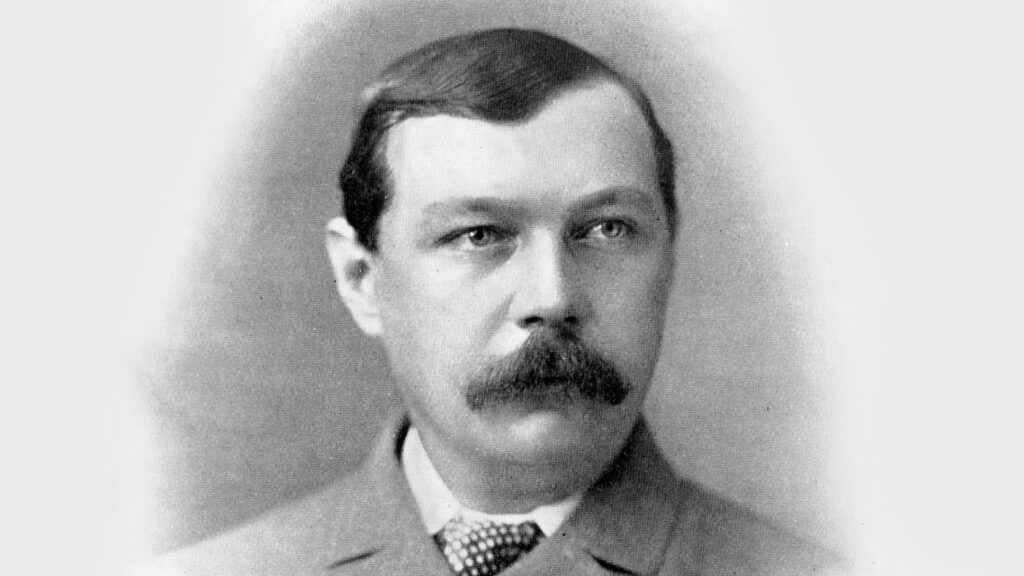
Sir Arthur Conan-Doyle: The Creator of Sherlock Holmes
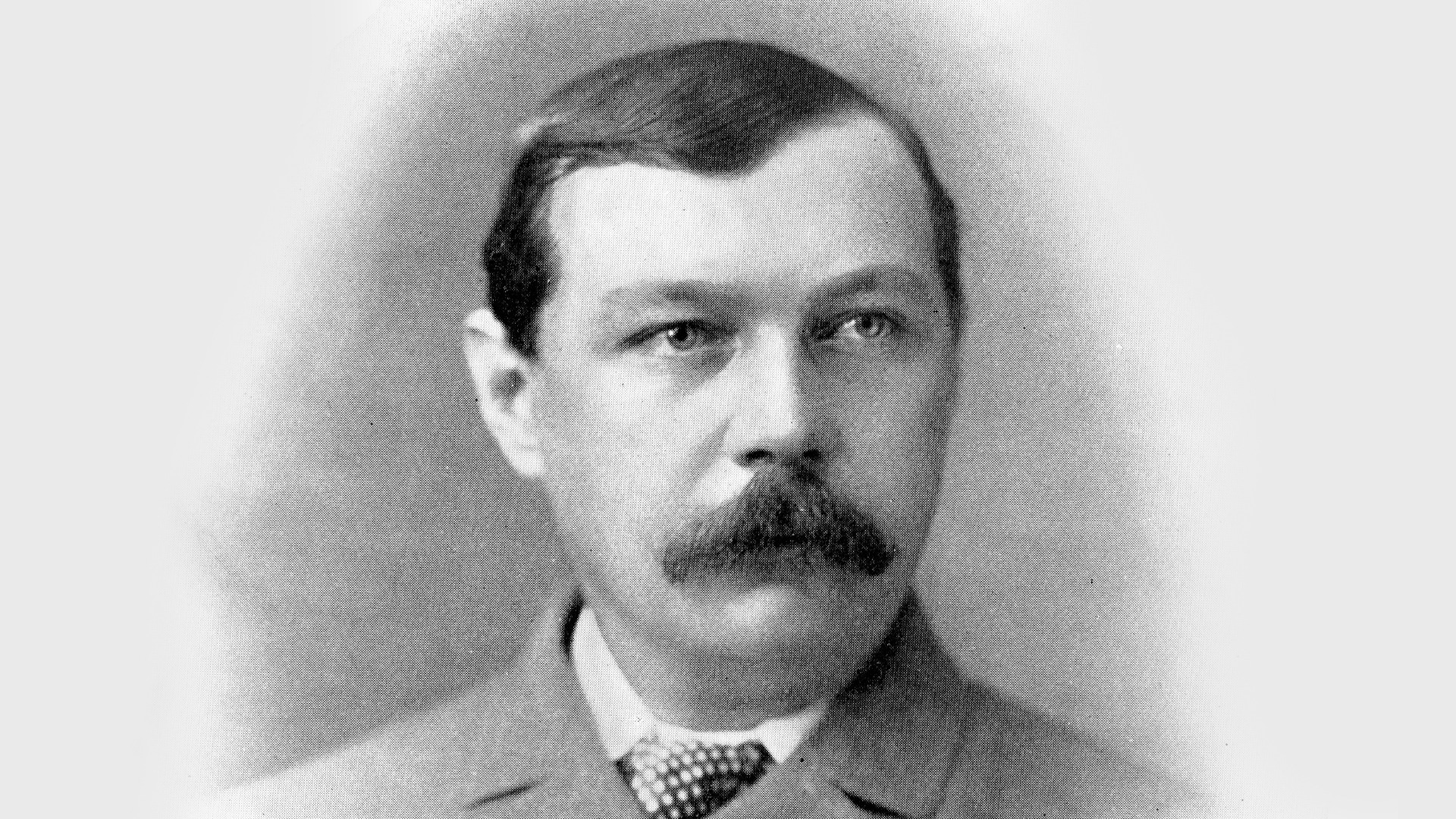
The grave of Sir Arthur Conan Doyle (1859 – 1930), creator of the world’s most famous fictional detective Sherlock Holmes, is under a large tree in Minstead churchyard.
After studying medicine, Conan Doyle set up in practice and wrote short stories at his desk while he waited for patients to arrive. They never came but his writing career flourished: such was the popularity of his Sherlock Holmes character that he had to revive the detective after killing him off in The Final Problem.
Conan Doyle wanted to focus instead on his historical novels, and it was while researching for The White Company – said to be his favourite work – that he discovered the New Forest. This led to him buying a country home, Bignell Wood, near Minstead, as a birthday present for his second wife Jean, and the couple used it as a rural retreat from their main home at Crowborough in East Sussex. The village of Minstead featured strongly in The White Company.
Conan Doyle turned to spiritualism following the deaths of several close family members around the time of the First World War. It is said that Bignell Wood was used to hold seances and that local postmen refused to deliver mail to the door; also that Charles Dickens and Joseph Conrad ‘came through’ to Conan Doyle to ask him to complete their unfinished works.
He was first buried in the grounds of his Crowborough estate and his widow was buried alongside him when she died 10 years later. In 1955, when the last of the Crowborough estate grounds were sold out of the family, the couple’s remains were removed and re-interred at All Saints’ Church in Minstead.
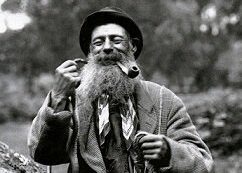
The Snakecatcher
Brusher Mills (1840 – 1905) became a New Forest folk hero for his unusual occupation as a snake catcher.
Named Henry and known as Harry, he grew up in the village of Emery Down and worked as a labourer. In his forties he moved into an old charcoal burner’s hut in woodlands near Sporelake Lawn, near Brockenhurst, and took up catching snakes for a living.
Armed with a forked stick and a sack, he set about ridding local properties of grass snakes and adders. He sent some to London Zoo as food for the birds of prey and used others to make ointments to treat snake bites and other ailments.
It is thought he caught around 30,000 snakes during his 18 years as a snake catcher. These days he would have to choose a different profession because all New Forest reptiles have special protection under wildlife laws.
He is said to have been given the ‘Brusher’ nick-name for sweeping the cricket pitch at Balmer Lawn between innings whenever a match was played. A simple man who loved the simple life, he lived contentedly in his mud hut apart from a spell in the workhouse after catching influenza.
He was a popular character in Brockenhurst, regularly enjoying a tipple at The Railway Inn (now named The Snakecatcher in his honour). He also became a popular tourist attraction at the local fairs.
Brusher was apparently distraught when his hut was vandalised and he was left homeless. Some say that his home was destroyed to prevent him using squatters’ rights or ancient Forest law to claim the land. He took up residence in an outbuilding at his favourite hostelry and died there not long afterwards.
You can see Brusher’s grave in St Nicholas’ Church, Brockenhurst, where villagers paid for a marble headstone to mark his final resting place.
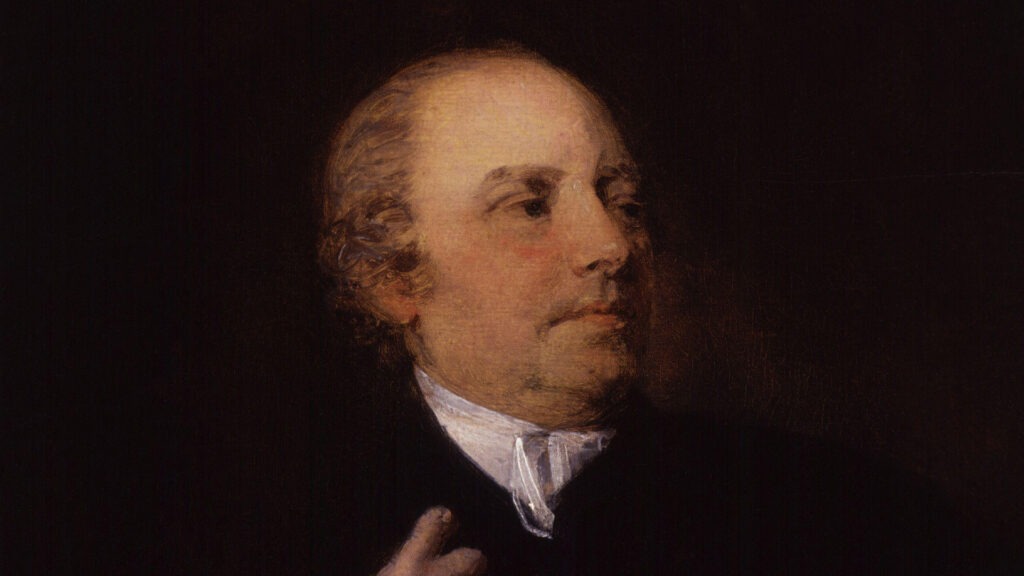
William Gilpin: The Artist
The Reverend William Gilpin (1724 – 1804) devoted his life to improving the conditions of his parishioners after becoming Vicar of Boldre.
By the time he acquired the vicarage in 1777, he had achieved great success in several different spheres: as a writer, artist, clergyman and schoolmaster. He was also an originator of the idea of ‘the picturesque’, which he had developed from travelling extensively around the country and sketching the landscapes he saw.
‘The picturesque’ was a set of rules for depicting nature, which was not thought capable of creating the perfect composition. Instead the artist was required to help nature along, perhaps by adding a carefully placed tree.
William Gilpin’s travel notebooks proved popular with the new generation of British travellers who toured continental Europe with their sketchbooks towards the end of the 18th century.
While living in the New Forest he published more sketches and thoughts in Remarks on Forest Scenery, and Other Woodland Views, as well as publishing sermons and works on moral and religious subjects.
He improved conditions in his parish by supporting a project for a new poor house. He held enlightened views on educating and disciplining the young, and personally built and provided an endowment for a parish school that now bears his name. He used the proceeds from his writing and an auction of his original drawings to fund more good works.
You can see a monument commemorating his long and productive life in the Church of St John, Boldre. His tomb is in the churchyard there.