Skip to content
1

Farming in Protected Landscapes

It's 17:07 Partly cloudy, 7°C
Scroll

Farming in Protected Landscapes is a grant programme designed to support farmers and land managers working within national parks and areas of outstanding natural beauty. It recognises the vital role that land managers play in caring for some of England’s most valued landscapes, while balancing the demands of food production, biodiversity, and public enjoyment of the countryside.

Developed by Department for Environment, Food & Rural Affairs (Defra) and delivered locally through the New Forest National Park Authority, the programme provides practical funding for projects that deliver tangible environmental and social benefits. This includes initiatives that enhance and restore the natural environment, reduce or adapt to the impacts of climate change, improve public access and engagement, and support the long-term sustainability of nature-friendly farm businesses.

By investing directly in locally led projects, Farming in Protected Landscapes helps ensure that protected landscapes remain resilient, productive, and accessible for future generations, while supporting the people who manage them day to day.

The programme has now been extended to run until March 2029. This extended commitment provides continued opportunities for farmers and land managers to develop ambitious projects that contribute to thriving landscapes, wildlife, and rural communities.

Case studies

Take a look at the landowners fighting the nature and climate emergencies with help from the Farming in Protected Landscapes fund. 

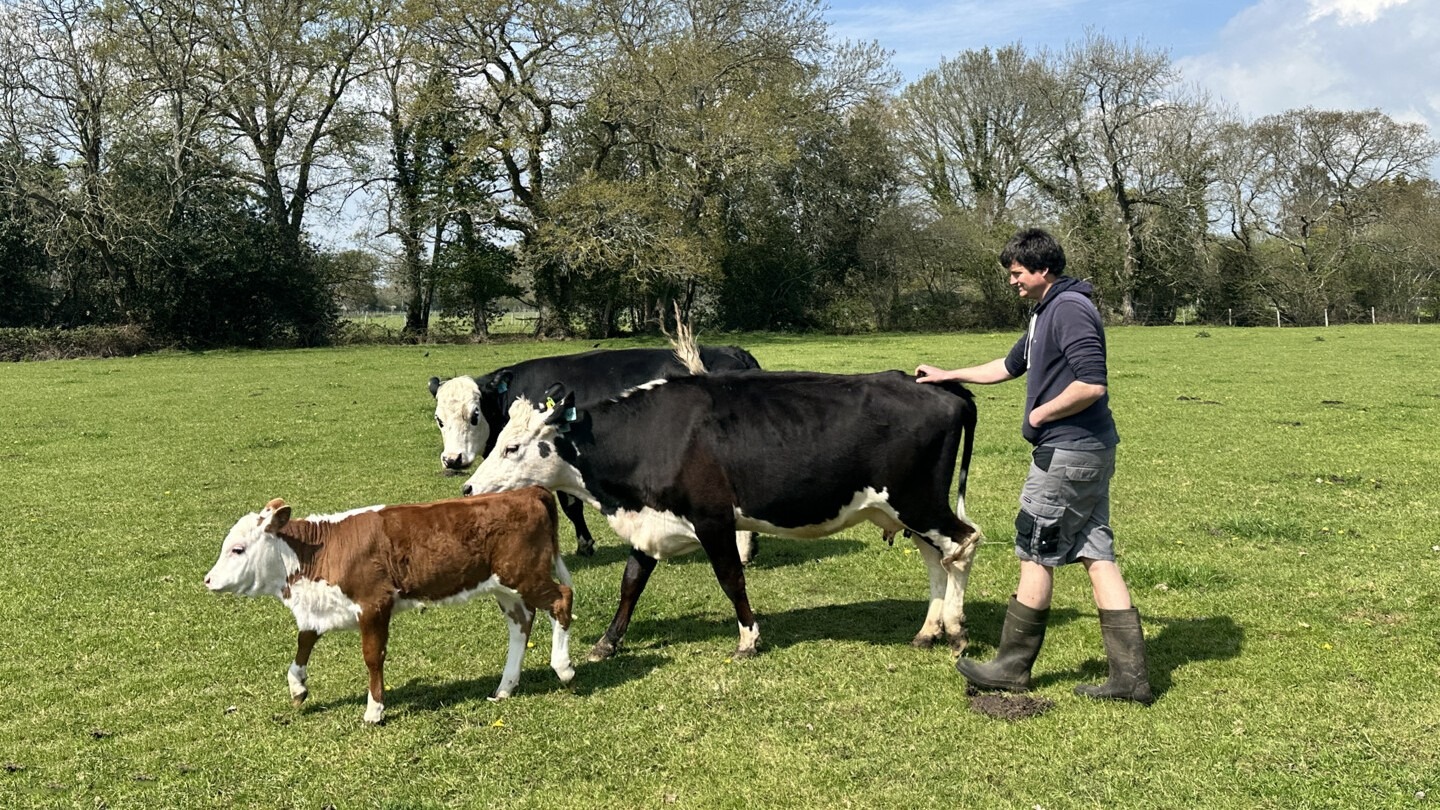
Claudia Weis and Eden Cormack have run St.Giles Farm at Godshill in the New Forest since 2017. With areas of species-rich pasture, Claudia and Eden are committed to increasing biodiversity on the 30-acre site as well as practising biodynamic agriculture, a form of organic farming which treats the land as a self-contained organism and maintains a natural capacity.

Together they have been enhancing the landscape by planting hedgerows and trees and building pasture fences, thanks to a Farming in Protected Landscapes grant.

See more case studies See more case studies

Who Can Apply

The programme is open to all farmers, commoners and land managers (including from the private, public and charity sector) in the New Forest National Park.

You must manage all the land included in the application and have control of all the activities you’d like to undertake, or you must have written consent from all parties who have this management and control.

Other organisations and individuals can apply, as long as they do this in collaboration with a farmer or land manager, or in support of a farmer or group of farmers. Common land is eligible for support through the Programme. You can apply as a landowner with sole rights, or as a group of commoners acting together.

The programme supports activity on any land within the New Forest National Park. It can also support activity on other land where projects can demonstrate benefit to the New Forest or the New Forest National Park Authority’s objectives or partnership initiatives. Most of the funding will probably be provided to projects within the National Park boundary.

What the programme will pay for

The Farming in Protected Landscapes programme will pay for projects that provide value for money and meet at least one of the following outcomes, under four themes.

Climate outcomes:

  • More carbon is stored and/or sequestered
  • Flood risk is reduced
  • Farmers, land managers and the public better understand what different habitats and land uses can store carbon and reduce carbon emissions
  • The landscape is more resilient to climate change.

Nature outcomes:

  • Existing habitat is better managed
  • There is a greater area of habitat improved for biodiversity
  • There is an increase in biodiversity
  • There is greater connectivity between habitats.

People outcomes:

  • There are more opportunities for people to explore, enjoy and understand the landscape
  • There are more opportunities for more diverse audiences to explore, enjoy and understand the landscape
  • There is greater public engagement in land management, such as through volunteering
  • Farmers and land managers feel increasingly comfortable with providing public goods.

Place outcomes:

  • The quality and character of the landscape is reinforced or enhanced
  • Historic structures and features are conserved, enhanced or interpreted more effectively
  • There is an increase in farm business resilience.

Your project must also help to deliver at least one of the objectives of the New Forest National Park Partnership Plan.

Read the New Forest National Park Partnership Plan.

Payment rates

The programme will work alongside – not in competition with – Defra’s existing and new schemes, adding value where it is most needed. If a potential project can be rewarded through those schemes instead, you will be made aware of them.

If an activity is equivalent to one under Countryside Stewardship (CS), the Programme payment rate will be the same as the CS rate. If not, we will base programme funding offers on the projected costs of an activity (with final payments made against evidenced costs).

Maintenance agreements

Capital infrastructure assets (including, but not limited to, fences, gates, building restoration), should be maintained for five years from the date of completion. Machinery assets (for example a brush harvester for grassland restoration) should be maintained for five years from the date of purchase.

The requirement to maintain natural, cultural and access activities (for example, management of grassland, restoration of a limekiln) delivered as part of programme will cease no later than 1 April 2026.

Application assessment

Applications for over £10,000 will be judged by a local assessment panel, a system which has been used locally before for the New Forest National Park Sustainable Communities Fund and New Forest LEADER programme.

The panel will be made up of eight to 12 people. It will include representatives from the New Forest National Park Authority, Natural England, representatives from the farming and land management community, and access and heritage specialists.

We expect that the panel will meet to make decisions every six to eight weeks. Applications for less than £10,000 will be decided upon by a senior officer of the National Park Authority team (who has no prior knowledge of the project).

Before you apply

1. Speak to the Farming in Protected Landscapes team for advice on the programme including to discuss your ideas, the payment rates and intervention rates for your project. Email fipl@newforestnpa.gov.uk.

2. Read the application guidance.

3. Read the privacy notice.

4. Download the application form.

Project ideas

The New Forest National Park Authority welcomes discussions with any farmer, commoner or landowner who would like to talk about applications for projects which fall under the four themes of the Farming in Protected Landscapes programme.

Here are some examples of projects the programme might support:

Nature

  • Restoration of native hedgerows, planting of hedgerow trees and in-field trees, and associated fencing
  • Creation of wildlife ponds/scrapes
  • Riverbank restorations and other interventions that improve water quality and biodiversity of rivers and streams
  • Creation, restoration and enhancement of grasslands, including by introducing native perennial wildflower seeds where appropriate, scrub management, introduction of grazing
  • Removal of non-native invasive species, for example rhododendron, Himalayan balsam.

Climate

  • Training and/or equipment/infrastructure to change practices that boost soil carbon on arable land, for example:
    • Reduced tillage or no tillage: methods of tillage or ploughing where disturbance to soil is minimised
    • Integration of crop residues to soil (letting the crop decompose back into the soil)
    • Cover or catch crops
    • Intercropping (the cultivation of two or more crops simultaneously on the same field)
    • Crop rotations
    • Addition of manure or other organic matter
  • Training and/or equipment/infrastructure to change practices that boost soil carbon on agricultural grassland (modified/improved land as opposed to semi-natural grassland):
    • Improved grazing patterns – changes to the timing and intensity of grazing
    • Fertilisation using manure
    • Sowing legumes
    • Sowing deep-rooted grasses
  • Peat restoration – for example raising the water table by blocking drainage channels
    • Planting trees on farmland – with the aim of increasing tree cover while, at the same time, maintaining agricultural production
    • On arable land, it involves increasing woody vegetation along field margins.
    • In pastures, trees can be more readily planted on fields and at higher densities.

People

  • Educational walks and talks on private land
  • Footpath or bridleway diversions and improvements for example, replacing a stile with a gate on a public right of way or fencing a field boundary to link up with other access routes
  • Renewing an access point to CROW access land
  • Interpretation panels/other means of public engagement at appropriate locations, e.g. farm shops, private campsites, footpaths

Place

  • Restoration of heritage assets, for example buildings, barrows, boundary banks
  • Eyesore removal, for example farm plastics, building materials, metals
  • Capital works on commoners’ holdings which will support a sustainable and environmentally friendly approach to commoning. This could include changes to the yard to adapt t drought and flood conditions and improve water quality in nearby watercourses, for example rainwater harvesting infrastructure and manure stores.

Multiple benefits

  • A facilitator/convenor of a group or network of farmers and landowners who want to work collaboratively at a landscape scale.
  • Activities which assist in preparing the holding for future Environmental Land Management Schemes and/or potential new approaches to the farm business. This could include items such as training, wildlife surveys/natural capital audits, carbon audits, heritage assets, farm business advice.
  • Desk based assessments/feasibility studies/advice to inform topics such as archaeology, commoning, nature recovery, carbon capture, farm business

Transparency of funding

Farming in Protected Landscapes is a five year grant programme developed by Defra.

The programme runs from July 2021 until March 2029. £873,349 in grants has been allocated within the New Forest area since the start of the programme.

Find details about the allocated grants.

Find out more about some of the grants that are benefiting climate, nature, people and place here.

For questions about the Farming in the Protected Landscapes programme in the New Forest, please contact fipl@newforestnpa.gov.uk.

Farming in Protected Landscapes programme privacy notice

How we will use your information

We need to collect personal information relating to applications for grants under the Farming in Protected Landscapes programme in order to administer the programme. This includes information such as, personal contact details, information relating to landholdings and farm businesses, and any agricultural subsidies claimed. Processing of your personal data will be in accordance with the Data Protection Act 2018 (DPA) and the UK General Data Protection Regulation (GDPR).

Information sharing

In order to administer this programme, we will need to share your information between teams within the Authority, as well as with our partner organisations which support the delivery of this programme. In this case, the information collected will be shared with:
• Local Assessment Panel
• Department for the Environment, Food and Rural Affairs (Defra)
• Rural Payments Agency.

We will only share your information if we are satisfied that our partners have sufficient measures in place to protect your information. We will not share your information for marketing purposes.

Retention periods

We will only store your information for as long as is necessary for the purposes for which it is held and in accordance with the requirements of the programme.

Lawful basis for processing

Your information is being processed under Article 6(1)(e) of the GDPR – processing is necessary for the performance of a task carried out in the public interest or in the exercise of official authority vested in the controller; and/or 6(1)(f) – processing is necessary for the purposes of the legitimate interests pursued by the controller or by a third party.

Data controller
The New Forest National Park Authority is the data controller and can be contacted at:
New Forest National Park Authority
Limington Town Hall
Avenue Road
Lymington
SO41 0JD

More details about how the Authority processes personal information can be found on our Privacy and Cookies page and by contacting our Information and Data Protection Officer at dpo@newforestnpa.gov.uk.


Keep your distance

Keep your distance from the animals and don't feed or pet them - you may be fined.