No fires
What danger does fire possess for the New Forest?
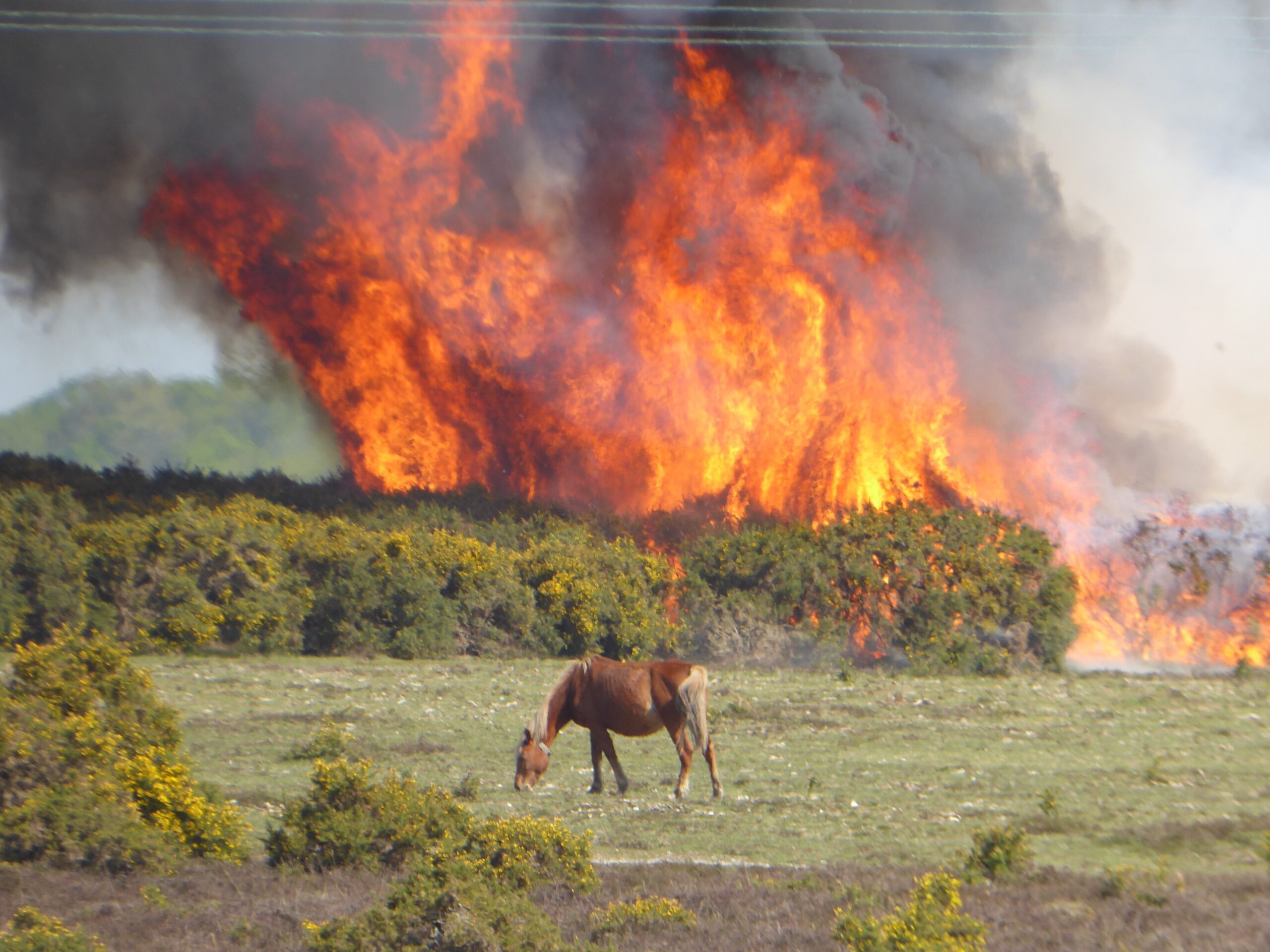
During periods of hot, dry weather, especially in the open areas of heathland, fires could destroy large swathes of internationally-important habitat, kill countless animals and endanger nearby properties.
As of 1 July 2023, a Public Space Protection Order (PSPO) was put in place banning naked flames on the open Forest. The introduction followed repeated fire damage to the Forest caused by campfires and BBQs, and the growing risk of wildfires due to increasingly hotter and drier conditions. The PSPO bans the lighting of fires of any type, including BBQs and any outdoor cooking facilities or equipment. It also makes it an offence to place, throw or drop items likely to cause a fire, such as lit cigarettes. Failure to comply can lead to fixed penalty notices of £100, which can rise to £1,000 following a successful prosecution.
What is a wildfire?
A wildfire is an uncontrolled, unwanted or unplanned fire. It can develop very quickly and rapidly spread across very large areas. Its behaviour is unpredictable and it can change direction very quickly and jump across roads and rivers. Wildfires do not start by themselves; virtually all wildfires are started by people, either accidentally or deliberately.
What to do if I spot a wildfire?
If you spot a wildfire call 999 immediately, try to give your exact location using What3Words, or any landmarks you can see, and if possible, meet the fire engine to give directions.
For a day-to-day update of the fire risk in the New Forest, visit the Forestry England website.
Please note that during winter and early spring, Forestry England staff deliberately burn substantial areas of the open Forest to stop the heather and gorse getting too tall and old. These fires are well controlled and there are always trained firefighters on hand.
BBQ-free New Forest:
Since 2020, the New Forest National Park Authority has been calling on retailers in and around the New Forest to remove disposable barbecues from sale and for a continued ban on fires and barbecues in the open countryside of the National Park.
Following our plea, 63 shops and outlets in and around the New Forest took disposable BBQs off sale. Outdoor fires in the New Forest fell by 40% in 2021 compared with 2020 and 30% less than 2019 before the pandemic. We supported and continue to work with partners to enforce the PSPO, which came into force in 2023.
Are fireworks allowed in the New Forest?
We ask display organisers and residents in the New Forest to be aware of ponies and other animals when using fireworks to avoid causing them injuries and distress. Remember that fireworks and lanterns may land near to livestock in fields some distance away.
The livestock in the National Park and horses in fields can be easily frightened by loud bangs and bright lights. It can cause them to injure themselves by running into fencing, or they can run across roads and be hit by passing traffic. This can also be a problem for those in stables who have no means of escape.
Fireworks can also disrupt the tranquillity of the New Forest, one of the special qualities for which it is designated a National Park.
Please consider celebrating your event without fireworks wherever possible or attend a legitimately organised event to preserve the Forest’s tranquillity and protect its livestock.
Fire facts:
- The New Forest includes large areas of peat, which can ignite very easily and burn for days or weeks, even smouldering underground and re-emerging away from the initial source. These fires are incredibly difficult to extinguish and highly unpredictable. Temperatures in a disposable barbecue can reach over 600°F and placing them directly on or close to the ground can cause peat to alight.
- It can take up to 48 hours for the ashes/embers from a disposable barbecue to cool down completely and even then, disturbing the ashes can introduce oxygen and reignite smouldering charcoal. Embers can travel for up to a mile dependent on wind speed.
- ‘Forest Friendly’ branded disposable barbecues are not forest-friendly – the term means you are burning coconut shells instead of charcoal.