Meet people and wildlife ranger Jim Day
Why do we need a people and wildlife ranger?
The New Forest National Park is a very special place. It is internationally important for nature, with 56% of it protected through designation as a Site of Special Scientific Interest (SSSI), Special Protection Area (SPA) or Special Area of Conservation (SAC). It has a mosaic of habitats including woodlands, heaths, mires and saltmarshes which support a wide variety of wildlife, which need to be protected.
My position is part of the New Forest District Council’s Green Way scheme. This looks at new housing developments around the fringes of the National Park and ensures the right mitigation measures are in place so there’s no adverse impact from the developments on our internationally-designated sites.
Although one of the smallest National Parks, the New Forest is also one of the most accessible and as such it is visited by more visitors per sq km than any other. It can be so easy for any of us to inadvertently negatively impact the very thing that we have come to enjoy.
What’s your main role?
To engage with new communities in newer building developments, in particular those at Ringwood, Fordingbridge and Totton. While the residents aren’t actually in the National Park, they can easily access it. My job is to help share what makes the New Forest special and how people can protect it.
I also help people make more use of the green spaces they have which they can use for recreation. It’s well-documented how green spaces can benefit people’s mental and physical well-being, so it’s really important to get out into nature.
How do you do this?
I speak with residents directly through schools and community groups – organising wild play days, events and activities, and sharing messaging from the New Forest code.
I help people value and explore their local green spaces through guided walks or wildlife discovery sessions, for example. These look at the species on our doorsteps, highlighting our amazing wildlife and helping people to appreciate it. You can’t protect what you don’t have experience of.
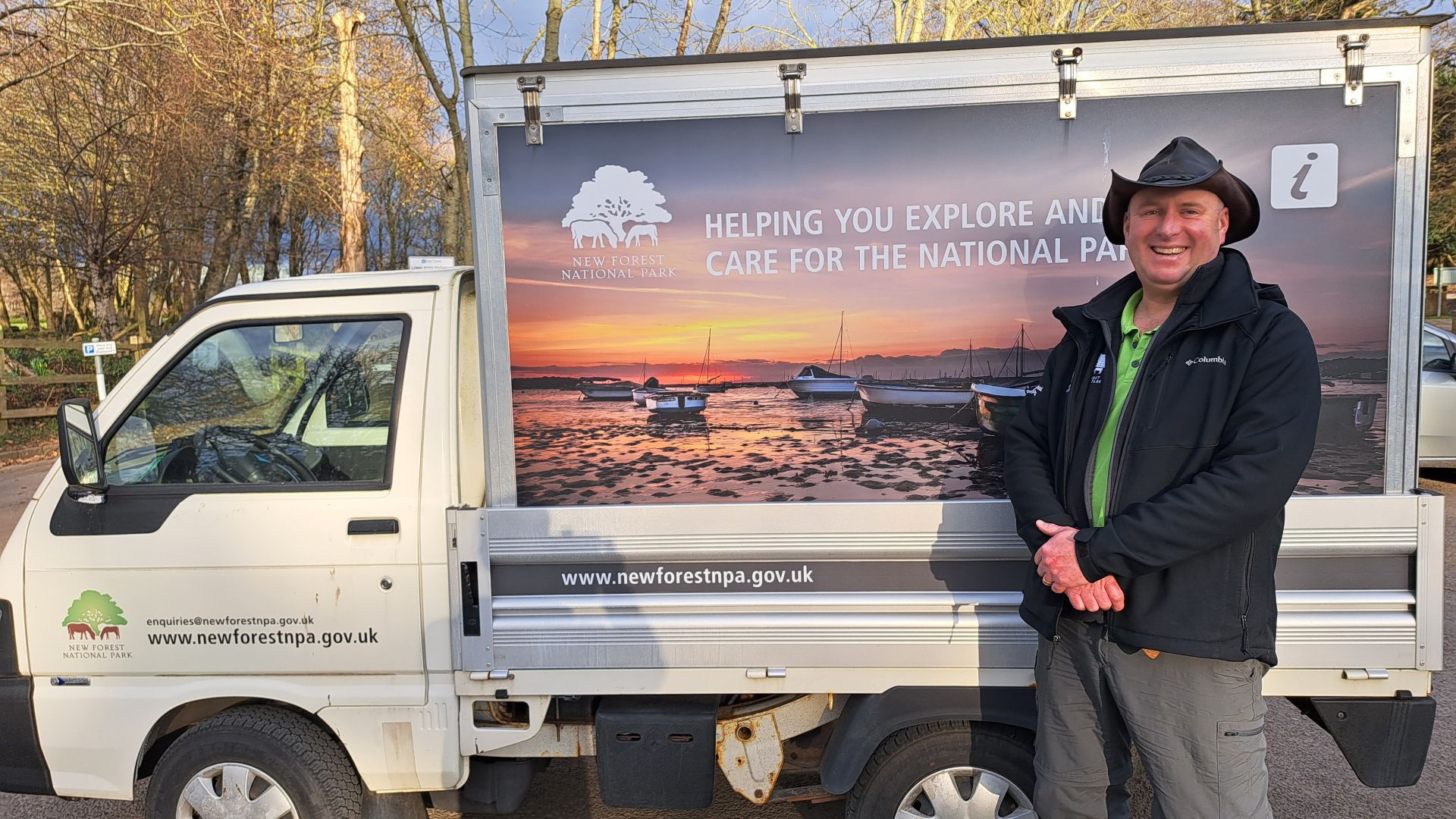
I bring our mobile ranger display vehicles out to communities, and also to the car parks around the edge of the New Forest which residents access most often from those towns and villages outside the National Park boundary. If you see me, please come and say hello and find out more!
What’s the biggest recreational activity in the New Forest?
Those of us with dogs are doubly blessed to be able to walk in the New Forest, and more time is spent dog walking in the National Park than all other recreational activities combined. A walk in the Forest can be very social as well as wonderful exercise and fresh air for the dogs and their owners alike. We have such a wealth of choice when it comes to places to walk.
So, my role also promotes responsible dog ownership. This includes always picking up after your dog and disposing of it properly; not letting dogs worry livestock; and staying on the tracks so as not to disturb ground-nesting birds in spring and summer.
What’s your favourite part of the job?
Working in the New Forest! I also love opening people’s eyes to things they didn’t know are there. For 20 years I was an education officer at the Hampshire and Isle of Wight Wildlife Trust, and sharing knowledge is a privilege for me.
People walk through the countryside and often don’t see what they’re walking past. I love pointing out the tiny details around us, such as the small scarlet red hazel flowers that will end up as a hazelnut if fertilized. Or the Town Hall Clock – an ancient woodland plant which is small and not very showy but close up its perfect cube of flowers is just wonderful.
I also encourage people to listen to nature more and identify bird calls. When people are more in tune to what species sound like, they are more likely to see them!
Anything else you’d like to add?
If everyone who lives, works or plays here follows the New Forest code, the National Park will continue to be an amazing place for future generations to visit.