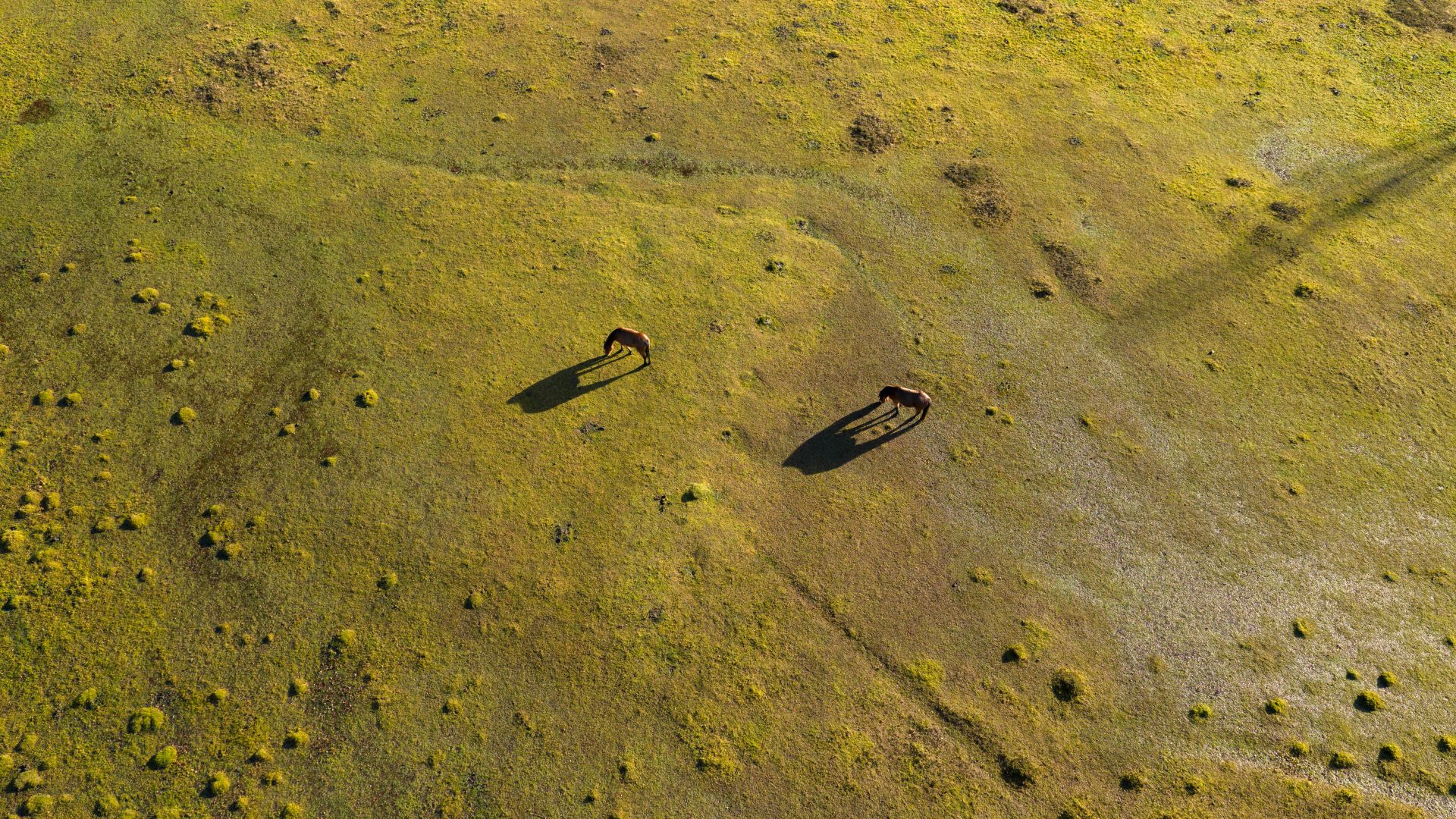
Please don’t feed the ponies. There is plenty of lush grass for ponies to eat in the spring and summer and in the winter months they are well-adapted to eating prickly fare such as gorse, brambles and holly.
Commoning animals
The animals
Probably the most well-known fact about the New Forest is that it is home to thousands of free-roaming animals.
As you travel across the National Park you will see ponies, cattle, donkeys, pigs and sheep. They could be grazing on gorse, wandering through villages or even crossing roads. That is why it is so important to drive carefully in the Forest and stay alert at all times.
The animals all belong to people called Commoners, who have the right to turn out their livestock onto the Open Forest.
In this section you can find out more about each animal.
Then find out how you can help protect the animals by reducing animal accidents and not feeding or petting them.
Cattle
There are several thousand cattle on the Forest in summer, with numbers dropping sharply in the autumn and winter when the grazing is not so plentiful and many have to go back to their owners’ holdings. A variety of breeds of cattle roam the National Park, with Galloway and Hereford crossbreeds being particularly popular for their hardiness.
Some calves are born on the Forest, but Commoners usually take their cows back to their holdings before they are due to calve in case there is a problem. Many cattle are also taken off the Forest in the autumn to prevent them from being poisoned by eating acorns.
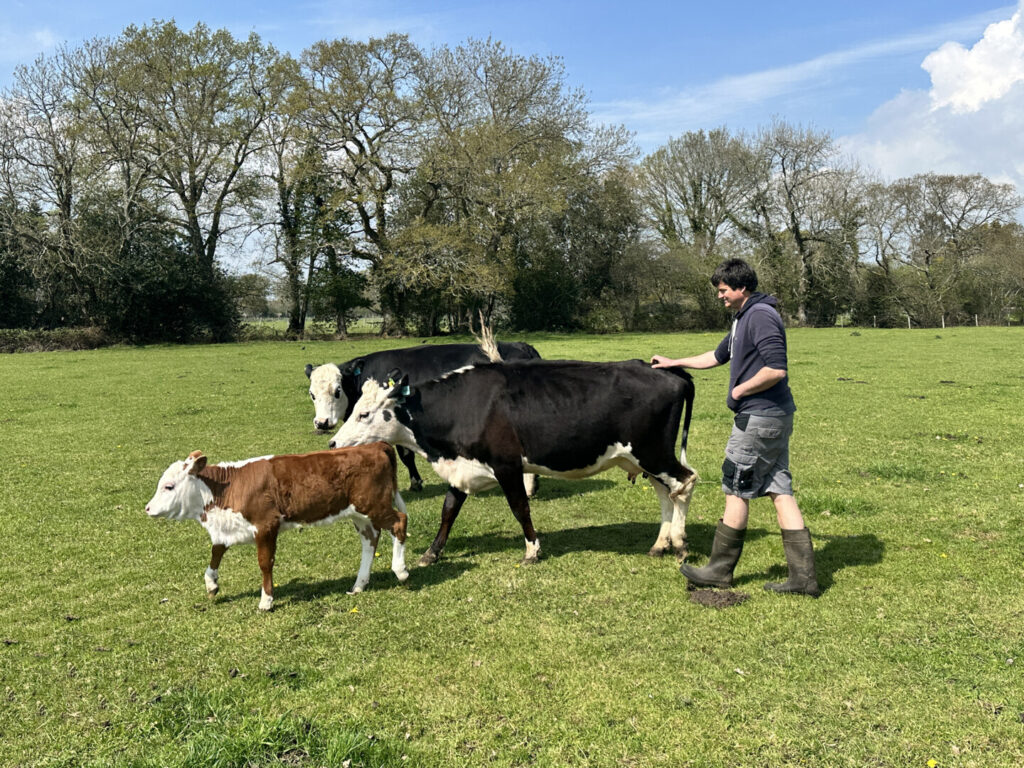
Bulls are not allowed to roam on the Forest, and aggression from cattle is rare. However, a cow which has recently given birth is very protective of her calf, and it is best to keep yourself and dogs well away to avoid causing distress to the mother.
Cattle are notorious for finding weak spots in fences and hedges in pursuit of lush grass, and property owners in the National Park need to check regularly that their boundaries are stock-proof – otherwise they could find their gardens invaded and badly damaged by cattle!
Donkeys
There are only a few hundred donkeys turned-out in the New Forest, compared with thousands of ponies and cattle. But they are quite visible, often seen roaming in villages such as Beaulieu.
Donkeys are smaller and generally more docile than New Forest ponies. They are extremely hardy and can survive on the Forest all year round without having to be returned to the Commoners’ holdings over winter. However, they are prone to lameness if their hooves are not regularly trimmed.
Donkeys prefer browsing trees and bushes to grass, and are occasionally unpopular with their human neighbours for nibbling an appetising hedgerow!
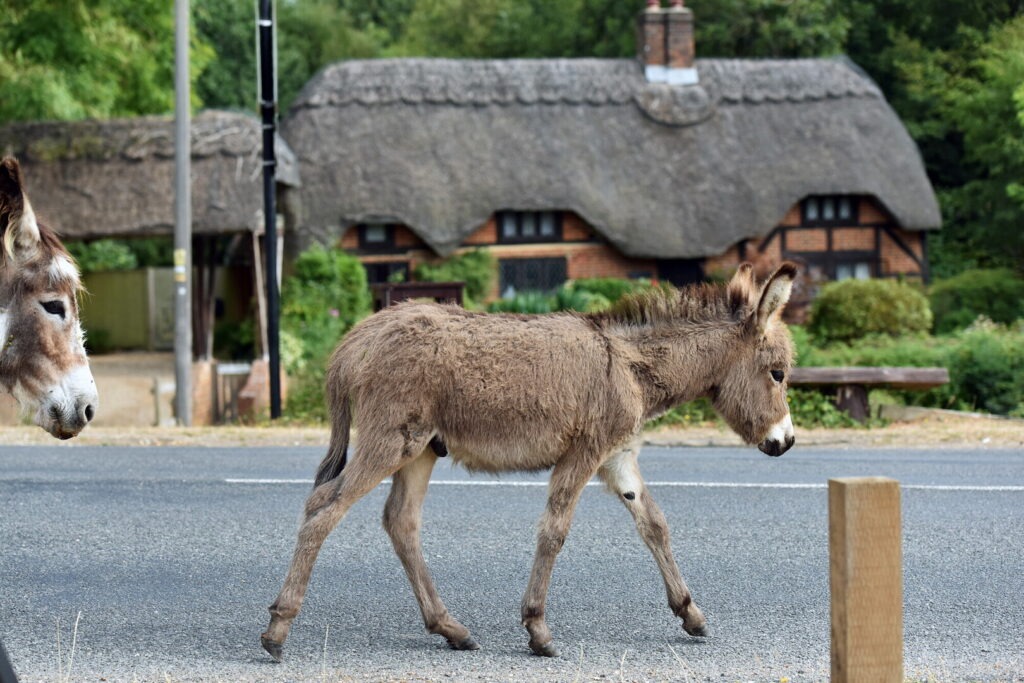
Commoners pay the same marking fees for donkeys as for ponies. Unlike pony stallions, male donkeys (jacks) are allowed to stay on the Forest all year round. Female donkeys are called jennies. The foals command a high price and can sell for £500 – more than double the value of a pony foal. Donkeys are generally kept as pets although they can be used for riding by children.
New Forest pony
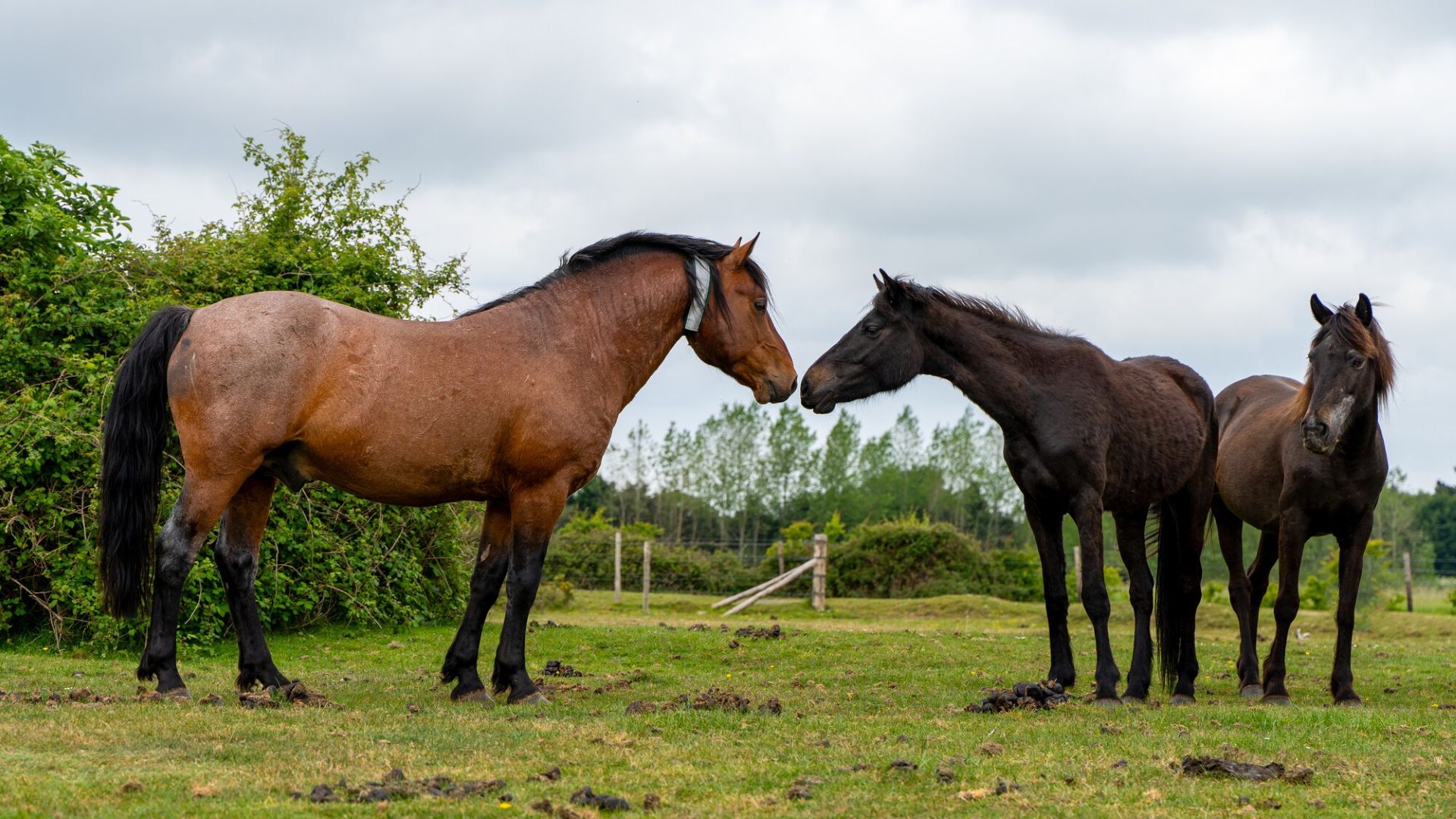
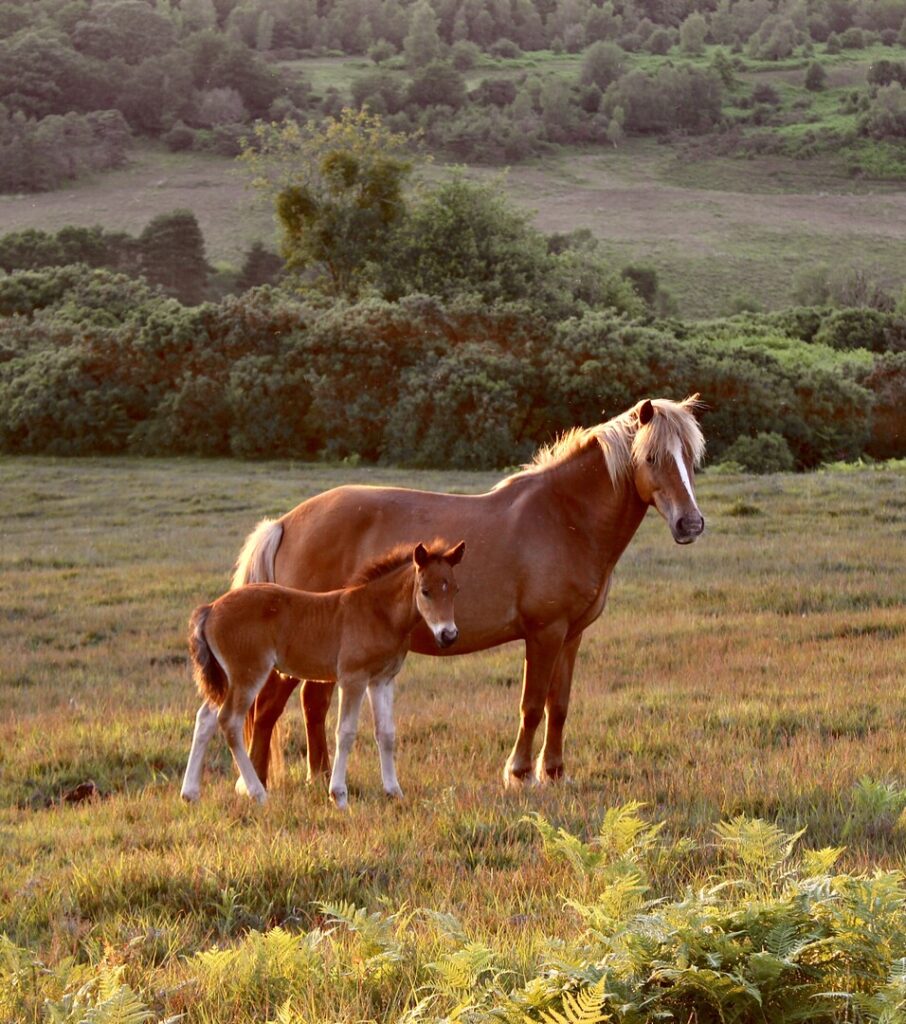
The New Forest pony is one of the best-known images of the National Park.
Many thousands of ponies roam free across the Forest and you will come face to face with these famous Forest residents as you journey across the area.
But the ponies are much more than just window dressing. They are sometimes described as ‘the architects of the Forest’ because it is their grazing that creates much of what people know and love as the New Forest – the close-cropped lawns between the wooded areas and the distinctive browse line on the trees marking the highest point ponies can reach.
Each pony is owned by a member of the commoning community – local people whose properties have common rights allowing them to turn out ponies to graze on the Forest. They ponies are said to be ‘half quiet’ or semi-feral and aren’t tame, so please keep your distance as they often have lice and they can bite and kick. You can be fined or prosecuted for feeding or touching the ponies and donkeys.
Pigs
In September each year for a couple of months, the famous New Forest ponies, cattle and donkeys are joined by another group of animals – pigs.
Commoners let their pigs loose on the Forest to hoover up fallen acorns which are poisonous to ponies and cattle and can cause internal bleeding and death. The pigs also eat beech mast, crab apples and anything else they can find.
The exact dates are decided by the Verderers and Forestry England according to seasonal variations. For example, the ‘pannage’ season, as it is known, can start towards the end of September and extend to the end of December because of a glut of acorns.
Pannage is also known as ‘common of mast’, one of the common rights attached to various properties in and around the New Forest that allows commoners to graze their pigs on the Forest. Traditionally pannage enabled commoners to fatten their pigs for slaughter and salting in the winter.
In modern times between 200 and 600 pigs are turned out as the number owned by Commoners has fallen. In the 19th century the number was as high as 6,000.
Commoners pay a token fee for each pig they turn out. Each pig is marked with an identity tag in its ear and has a ring put through its nose to reduce the damage to the Forest caused by rooting.
Thank you for keeping your distance from the pigs (don’t touch or feed them), and drive slowly through the Forest as they often wander onto roads. Autumn rain or fog, low sun and fading daylight can also hinder visibility, so please drive to the conditions at the time.
Sheep
There is only one Commoner turning out sheep in the New Forest at present, and these are to be found grazing on the National Trust-owned commons around Bramshaw, in the north of the National Park.
Sheep are not generally seen roaming on the open Forest because the right to turn them out (known as common of pasture for sheep) is attached to only a few properties and is rarely exercised. Sheep also tend not to fare well in the New Forest environment, as they are prone to fly-strike and lameness, and typically prefer the conditions offered by higher moorland landscapes such as Dartmoor.
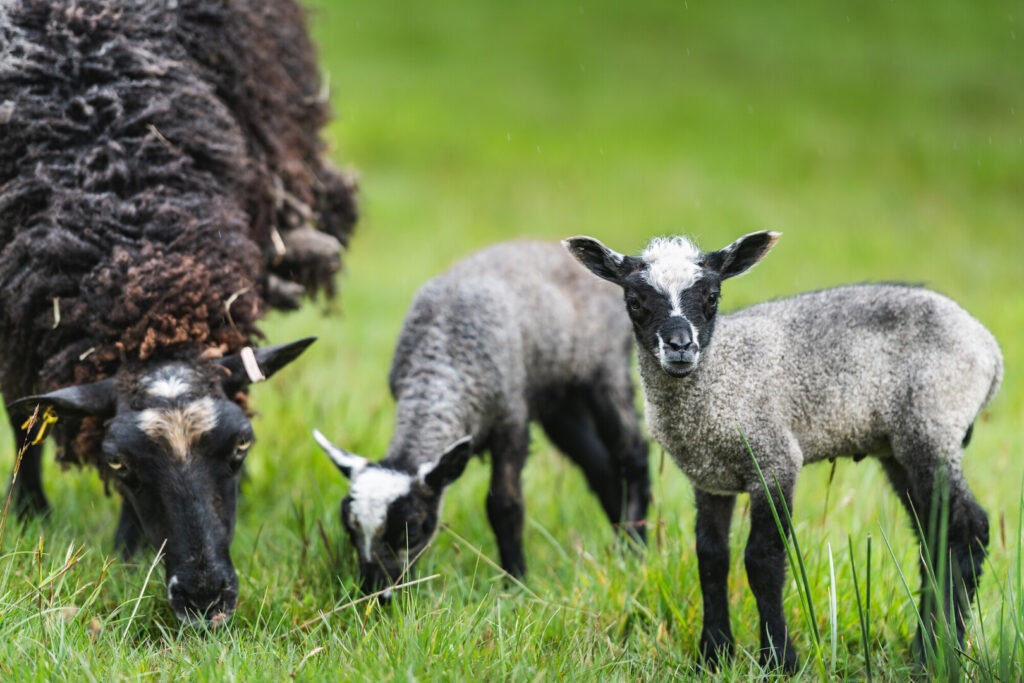
As a result, sheep play a far more limited role in the Forest today than other commoned animals. Their presence around Bramshaw reflects both the survival of historic grazing rights and the careful decisions made by Commoners about animal welfare and land management. This selective approach helps ensure that commoning continues in a way that supports the health of the animals while maintaining the balance of habitats across the New Forest.