10 November 2025
To be a net zero organisation by 2030.
Since 2022 we have been working with the Defra sustainability team and its chosen independent experts, the Carbon Trust. This work has been to simplify, standardise and amplify the data around the carbon footprints of Defra itself and related bodies such as ours.
We currently have the lowest emissions of any National Park Authority within Defra and are one of the smallest emitters even when it is expressed as emissions per full-time equivalent staff member (to allow better comparison of different sized organisations).
However there is always more we can do.
For the latest status – see our carbon reduction plan reports in the documents below.
The most recent data for the National Park, provided by the Department for Energy Security and Net Zero (DESNZ), showed that between 2022 and 2023 emissions reduced by around 10%.
This reduction appears to have been driven largely by reductions in emissions associated with waste, road transport and household electricity.
This is compared to a UK reduction of 5.4% across the same timeframe and 1.1% increase globally.
The UK’s National Parks become the first in the world to join the United Nations-backed ‘Race to Zero’ initiative in 2024.
We committed to drive rigorous and immediate action to halve carbon emissions within our landscapes by 2030 and become significant net carbon sinks by 2050.
In 2024 we reported on our Race to Zero climate activities for the first time and were given a prestigious ‘B’ rating, assessing us as in the category of ‘Climate Managers – Organisations that are managing their environmental impact effectively, actively making progress but still with room to grow’.
Organisations globally are part of this reporting process, so for the New Forest National Park to be seen as up near the top is a real credit to our partners and communities of ‘Team New Forest’ and everything we do that helps the National Park respond to climate change.
We have committed to being a net zero organisation by 2030 and we are increasing our skills and understanding by offering Carbon Literacy Training to all staff.
We aren’t perfect and we know there is always more we can do.
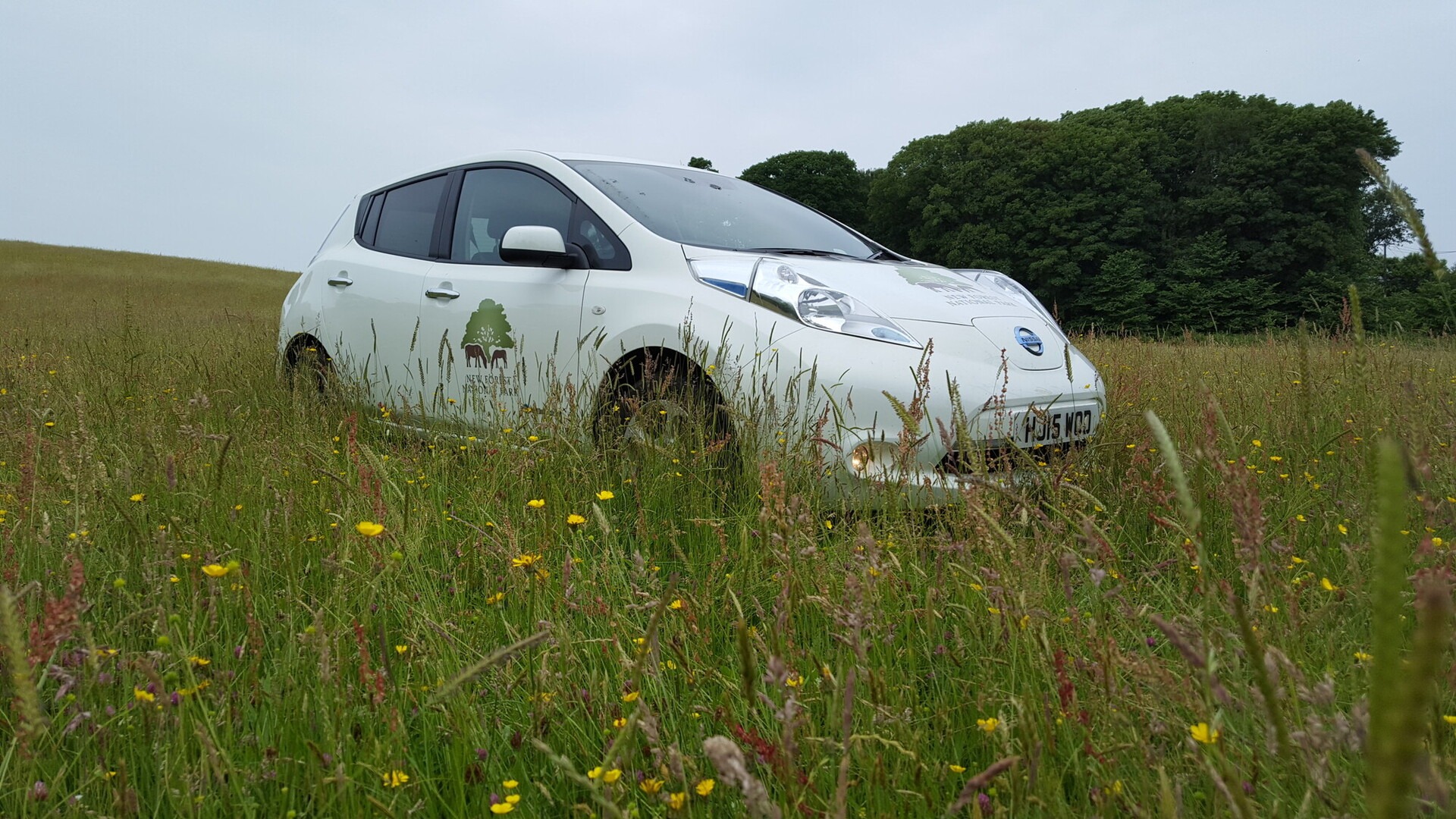
Here are some of our sustainability initiatives to reduce our organisation’s carbon footprint:
As well as looking at our organisation's impact on the environment, we work across the whole of the New Forest National Park Authority to support the landscape to respond to climate change, from planning policies and control, to public engagement, nature recovery and sustainable farming support. Learn more about climate crisis and impacts in the New Forest, plus what we and our partners are doing.
ClimateKeep your distance from the animals and don't feed or pet them - you may be fined.