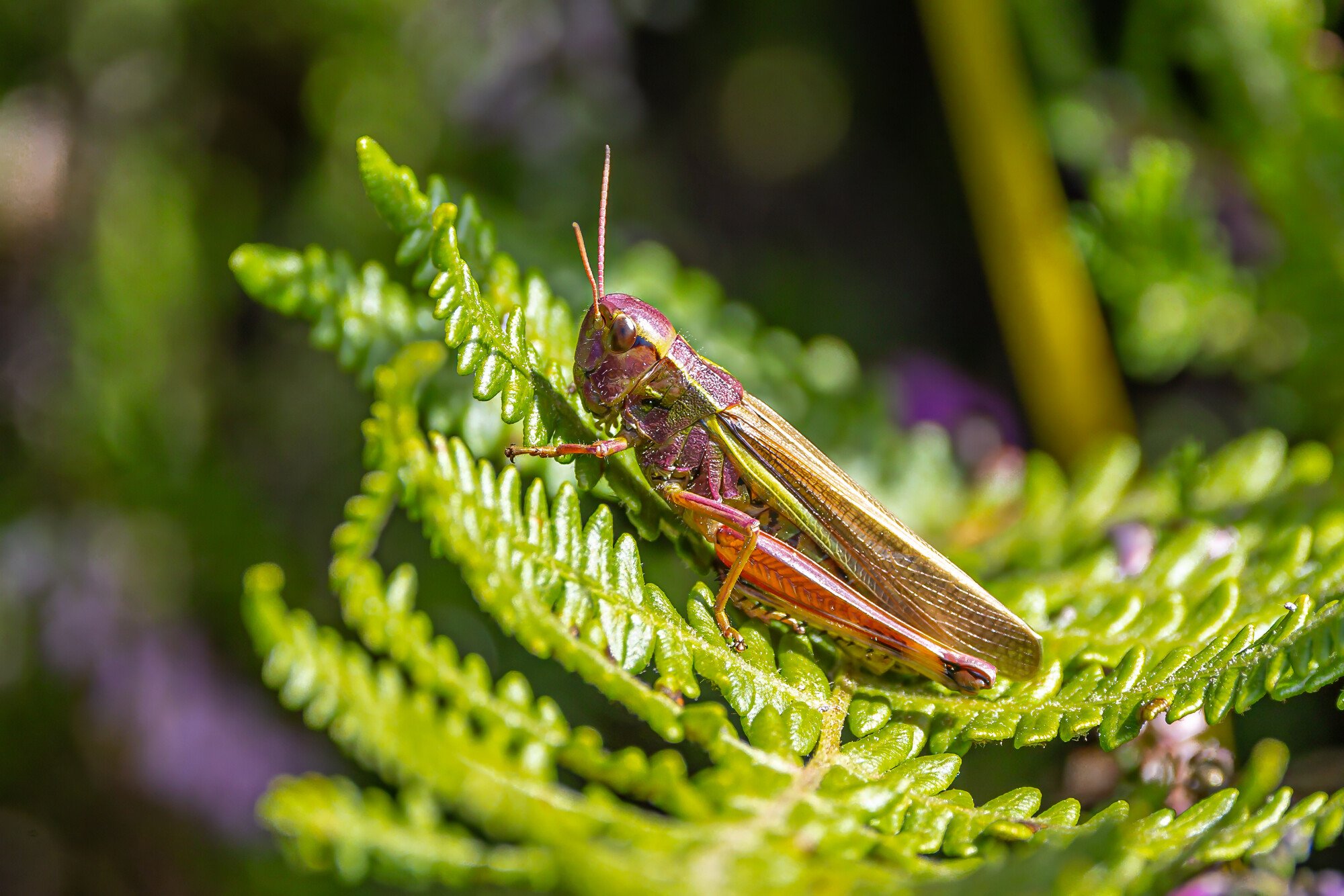
August brings the loudest insect chorus of the year. The New Forest is home to a large percentage of the UK’s grasshopper and cricket species, and on hot days the sound of their calling, known as stridulating, fills the air. Listen for common green, speckled and oak bush-crickets which all have huge, long antennae, and also listen for field and meadow grasshoppers with their tiny antennae. Much rarer is the impressive marsh grasshopper (below) which is the UK’s largest grasshopper – it can grow to over 3cm, and likes to hide in wet, marshy areas.

As high summer merges into late summer butterflies are still on the wing. On heathland you might spot grayling butterflies which take flight through the heather if disturbed from the ground. Gatekeeper butterflies (below) prefer woodland edges, meadows and hedgerows, and can be seen through to mid-September.
Dark and light crimson underwing moths take flight just before dusk, flying high around oak canopies and trunks. Both species are rare and appear on the UK List of Habitats and Species of Principal Importance, so if you spot snap a photo as they are really special.

All three types of heather will be in full bloom on the heathlands in August:
- Ling has small pink flowers and dense stems
- Bell heather has larger, vivid bell-shaped flowers
- Cross-leaved heath heather has clusters of pale pink bells atop tall stems.
In wetland areas look for the intense blue, trumpet-shaped blooms of the rare marsh gentian. In the valley mires if you look from a boardwalk or other dry vantage point and you might see the yellow flowers of marsh St John’s wort, bog asphodel (below) or the white flowers of the sticky-leaved sundews.

As well as adult reptiles, you might now see young slow worms (below), lizards and snakes, which are most likely to be spotted early in the morning when the sun is still warming the ground.

August is also a great month to visit the National Park’s 26 miles of coastline such as the beautiful Lepe Country Park. Wildlife to look for include goby fish, shrimps, crabs, sea anemones, snails and shellfish. Take photos and enjoy watching them in their natural environment without removing them from the water. Many of these delicate creatures can be easily harmed by handling or sudden changes in temperature. Please observe without disturbing to help protect this unique coastal habitat.
During hot weather, it’s important to lend a helping hand to wildlife. You can make a big difference by leaving out fresh water and allowing a wild patch in your garden to provide shelter and shade. Place shallow dishes of water in cool, shady spots as these can be a vital lifeline for birds, mammals, and insects. Adding a few pebbles or stones gives smaller creatures a safe place to land and drink without the risk of falling in. If you have a pond, topping it up with collected rainwater helps keep it healthy and supports the wildlife that depends on it.
This is the final blog in our year‑long monthly series exploring the wildlife wonders of the New Forest. We hope you’ve been inspired and have enjoyed reading them. Next time you encounter wildlife in the New Forest why not tag @NewForestnpa on your socials – we’d love to see what you find!