Location plan
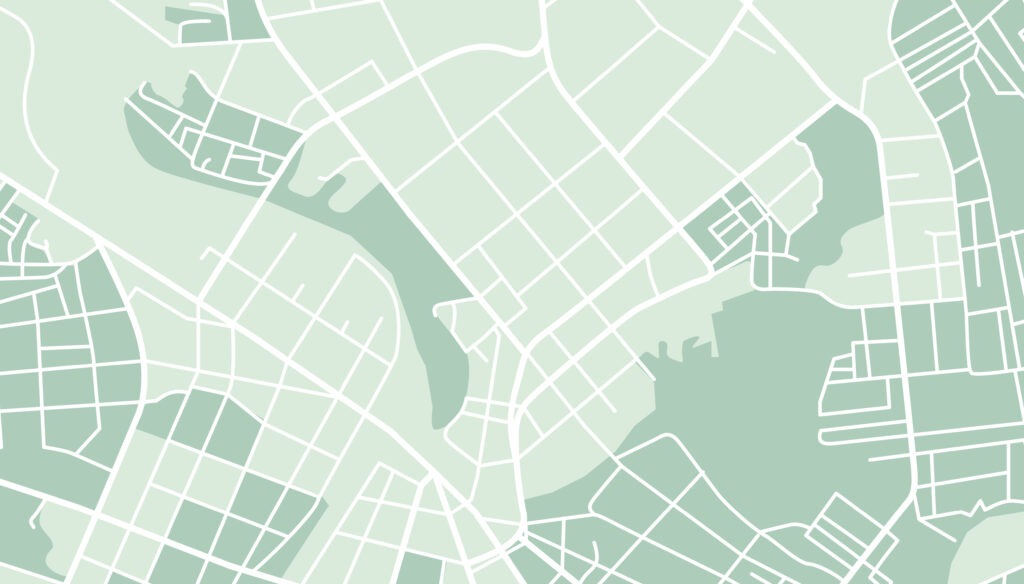
Example plan for a proposed development in its wider location
See plan See plan
planning guidance
This section explains the planning application process – from being validated by our planning administration team, to being assessed by a planning officer, to the decision itself.
Before submission (optional but recommended)
Applicant may seek pre-application advice from us
Initial discussions identify:
Application submitted via the Planning Portal or directly to us
Includes:
Application submission and accuracy check
Once validated, the application becomes valid and the determination period starts.
Public and specialist input
Main evaluation stage
Planning officer:
How the decision is made
Formal outcome
Decision notice issued:
After approval or refusal
If approved:
If refused:
First stage: Validation
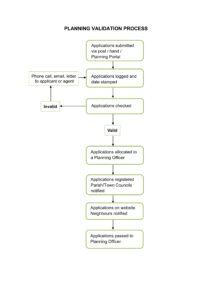
When you make a planning application it will firstly go through the validation process, where the application is checked by our administration team.
Unfortunately many applications we receive are invalid due to incorrect or missing information. Please see our guidance on applying, and example plans below to avoid submitting an invalid application.
We’ll usually check applications within five working days and we will contact you if your application is invalid. If it is invalid, then we will need any requested extra information from you within 21 working days or the application will be returned and the fee refunded.
Once an application is considered valid it is uploaded onto to our website. Where applicable, all immediately-adjoining neighbours are notified in writing and given 21 days to make their comments.
Your application then enters the planning process stage.
Example plan for a proposed development in its wider location
See plan See planExample plan for a development proposal
See plan See planExample plan for typical two-storey rear extension
See plan See planAfter your application has gone through the validation process it’s passed to a planning officer and enters the planning application process.
Once in this stage and all the information you have supplied is considered correct your application should be dealt with within eight weeks.
There are some exceptions:
The process takes several weeks as we are required to hold a public consultation period. This allows time for consultees, parish and town councils and members of the public to look at applications and submit their comments.
If amended plans or descriptions are submitted, these may require reconsultation.
Once the consultation period has finished, comments considered and a decision made, the applicant will be notified of the outcome.
See our Development Control Charter for a more detailed explanation of our planning procedures. [This seems very out of date; suggest liaison with Jo Murphy as to whether it can be simply updated or whether there is a formal process for this]. [Yes, it is very out of date. It’s been on my to do list since I started but never got back to it, still to do and maybe turn into a web page rather than a document?]!
How to apply
The most frequent way a planning application is made is online using the government’s Planning Portal website. You can ask for pre-application advice from us, checking what fees are due and looking through our online guidance. Alternatively, you can submit a paper application using the forms within this section.
Payment can be made by credit card. We are able to take card payments between 9am – 12.30pm and 1.30pm – 4pm each day by phone (quoting the relevant case number) to 01590 646600, option 1. If submitted through the Planning Portal then it has an online payment system. Alternatively, if sending a cheque it should be made payable to: New Forest National Park Authority. Please note this must be written in full as abbreviations will be returned.
Getting advice before you apply can help the process run more smoothly and quickly, while reducing the chances of you submitting an invalid application. Find out more in our dedicated page
Guidance on applying
Many of the planning applications we receive are invalid when submitted.
Here are some common pitfalls to be aware of when applying:
There are a number of supporting documents that must be submitted with every application, so please follow our guidance carefully to ensure nothing is missed.
All applications must be in metric and A3 size plans are preferable. We are unable to accept plans larger than A1 size.
Cheques must be made out to ‘New Forest National Park Authority’ in full. Any abbreviations may not be accepted by our bank and/or may delay processing of the payment.
Planning permissions often include conditions that require further details to be approved, such as samples of materials or construction details. These details must be formally agreed by us, sometimes before any work can begin on site.
Application forms
If you are unable or do not wish to submit your application using the Planning Portal’s online option then you can use their online form selector at Find and download paper forms – Paper Forms – Planning Portal to identify the correct form and then either complete the application online or print the form off and submit your application on paper. Please read the Guidance Notes if submitting your application via the Planning Portal.
Each planning application requires the necessary ownership certificates to be completed. These are located at the end of each application form. Depending on which certificates you may need to sign, you may also need to complete one of the following notices:
For householder planning applications, the Householder Notice can be used in all situations.
For all other relevant applications:
Detailed government guidance on ownership certificates is available to help with your application.
Keep your distance from the animals and don't feed or pet them - you may be fined.