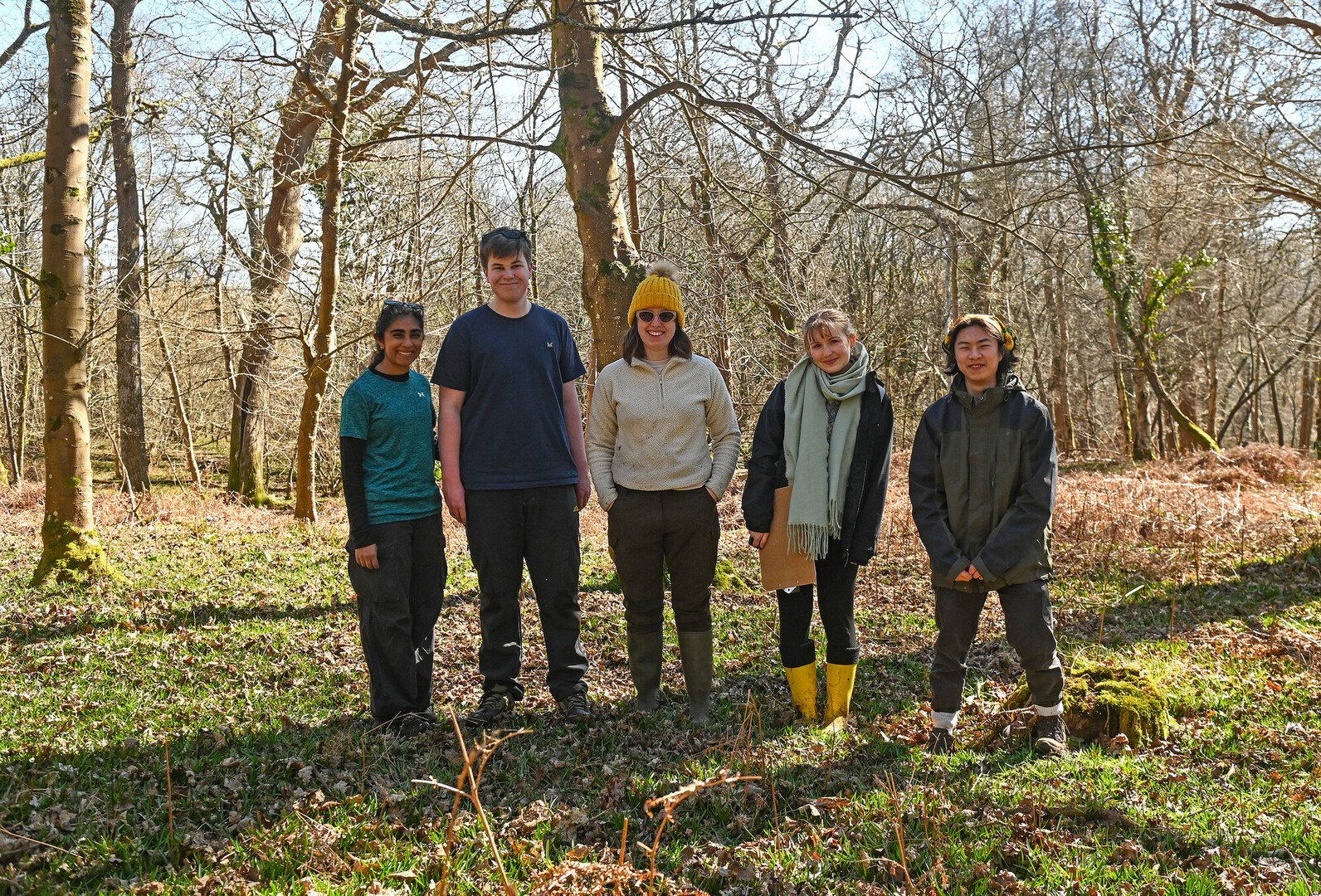
Budding conservationists and volunteers are helping shape the future New Forest freshwater landscape.
From clearing invasive rhododendron to helping dig test pits for creating ponds, local nature enthusiasts have had a hands-on role in shaping habitats for a wide variety of rare and threatened species.
The Forest is one of the UK’s most precious freshwater landscapes, but habitats are under mounting pressures due to factors such as climate change, so the work is crucial to boosting their prospects of flourishing in the future.
Through the Species Survival Fund (SSF) project, a collaborative scheme led by the New Forest National Park Authority, Freshwater Habitats Trust (FHT) is creating new ponds and rejuvenating fens and woodland across multiple sites in the Forest.
These efforts not only safeguard existing habitats but also create space for rare and specialist freshwater species to flourish.
Beyond the practical work, volunteering provides a powerful way for people to connect with the environment, learn about the importance of freshwater habitats and feel a sense of ownership over conservation projects.
‘Volunteering is incredibly important,’ explains Georgia Staszynska, engagement officer for FHT.
‘It is an opportunity to educate people on the importance of the New Forest as a freshwater landscape but also for them to have their own impact on the project.’
Mentoring and knowledge-sharing are also vital. By including young conservationists and local communities, the project is helping to pass on skills and foster a culture of stewardship that will last long after the project’s completion.
Georgia adds: ‘It’s incredibly important that these projects have a legacy that lives on once the work on the ground has been completed.
‘Ultimately, the best way to do that is through mentoring and keeping the knowledge and wisdom going within the Forest community and passing that down to the next generation of conservationists.
‘The main way that we can foster care for the environment is for people to be involved and to understand it on a personal, tangible level.
‘Having citizen scientists who can go out and collect really important data about species distributions is so valuable to support future decision making and the way we manage the Forest.’

The New Forest is one of just 24 nationally important freshwater landscapes identified by FHT and it stands out as among the richest in terms of rare species per square kilometre.
This biodiversity is hugely helped by the long-standing tradition of grazing by Commoners’ livestock which maintains a balance in the landscape, preventing dominant vegetation from taking over while creating bare patches where rarer species can thrive.
By expanding and connecting wetlands from the Forest’s core outwards, biodiversity will become much more resilient to pressures such as climate change, habitat loss and pollution.
‘We are really lucky to still have livestock grazing through commoning,’ explains Georgia.
‘It helps to keep dominant vegetation at bay and creates little areas of bare ground which can allow other things to spring up and take hold.
‘It is a delicate balance, but these things are incredibly beneficial not just for biodiversity in general but in particular for freshwater biodiversity.’
The £1.3million SSF project aims to restore around 250 hectares of land for nature across nearly 30 sites by restoring and expanding habitats for species.
FHT is one of five partners involved, alongside Amphibian and Reptile Conservation, Hampshire and Isle of Wight Wildlife Trust and New Forest Commoners’ Defence Association.
This project is funded by the Government’s Species Survival Fund. The fund was developed by Defra and its Arm’s-Length Bodies. It is being delivered by The National Lottery Heritage Fund in partnership with Natural England and the Environment Agency.